

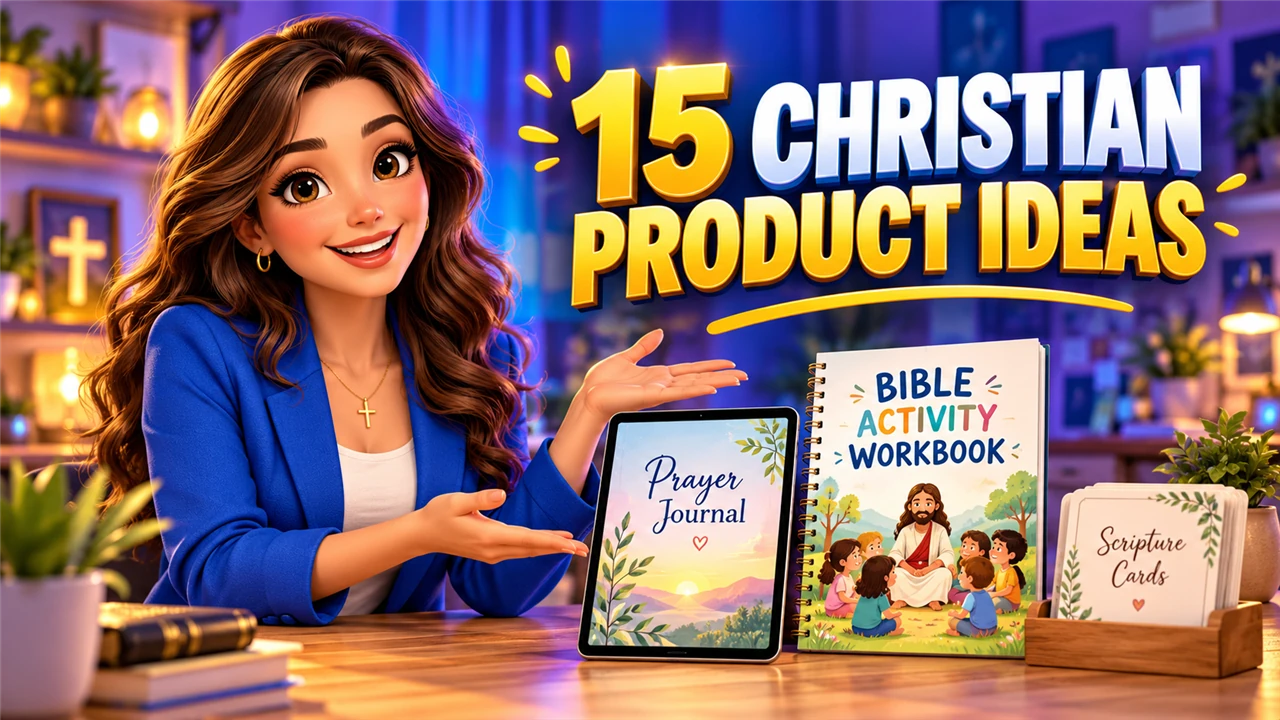
The most useful Christian digital product ideas begin with a specific person and a practical need. A parent may want a quiet Bible activity for Sunday afternoon. A small-group leader may need discussion pages that are easy to print. A busy entrepreneur may appreciate a simple prayer and planning routine.
You do not need a huge catalog to serve those readers. Start with one resource that makes a familiar task easier, then improve it through feedback. The ideas below are starting points to test, not a list of proven bestsellers or guaranteed income opportunities.
How to choose between Christian digital product ideas
Before choosing a format, complete this sentence: “I help [specific reader] do [specific task] with [simple resource].” For example: “I help parents lead a ten-minute Bible activity with a printable story worksheet.” That gives you a clearer brief than “I want to sell Christian printables.”
Ask a few people in your intended audience what they currently use, what frustrates them and what would make a replacement worthwhile. Show a sample page and watch whether they understand it without explanation. Compliments are encouraging; actual use and willingness to pay are stronger signals.
15 ideas for your first faith-based download
1. A seven-day prayer journal
Create a compact journal for readers starting a prayer habit. Include space for gratitude, requests and reflection. Keep prompts gentle and specific. A useful first version might have one instruction page and seven daily pages, rather than a complicated year-long system.
2. A Bible reading tracker
Design a tracker around a clear goal, such as following one Gospel or recording completed chapters. Distinguish a tracker from a reading plan: the first records progress, while the second recommends a sequence. Check references carefully and make progress boxes easy to mark.
3. Scripture memory cards
Create coordinated cards with readable type and room for personal notes. Decide whether they are for a desk, a family activity or a group session. If you reproduce Bible wording, check the translation’s permissions for your specific commercial format before including it.
4. A children’s Bible coloring pack
Choose one coherent theme, such as creation or Jesus’ parables, and draw original scenes. Match detail and instructions to the intended age group. Include a short parent guide that identifies the relevant passages without presenting invented dialogue as Scripture.
5. A Bible activity workbook
Combine a small selection of puzzles, matching activities and reflection questions around a learning objective. Include answer pages where needed and test the activities with an adult supervising the intended age group. Browse our Bible books for children for examples of how a coloring resource and an activity resource serve different needs.
6. Family devotional conversation cards
Offer short prompts for mealtime or a weekly family gathering. Separate a passage reference, an observation question and a practical application. Avoid assuming every family has the same structure, reading ability or amount of time.
7. Sermon notes pages
Provide space for the passage, main ideas, questions and a next step. A children’s version can use drawing boxes; an adult version can offer more writing space. Test whether the layout works on a clipboard or inside a binder.
8. Small-group discussion worksheets
Develop original discussion questions tied to a clearly identified passage. Add a leader page with timing suggestions and optional follow-up questions. Have a knowledgeable reviewer check biblical context, and state whether the license covers one person or a group.
9. A Christian gratitude journal
Use varied prompts that help readers notice everyday provision, relationships and opportunities to serve. Avoid repeating the same question across dozens of pages just to increase the page count. Keep the writing area large enough for real use.
10. A spiritual growth planner
Bring prayer, reading and reflection into a simple weekly structure. An undated version can reduce the maintenance required by a dated edition. Our EDEN 365 spiritual growth planner illustrates this broader product category; develop your own structure and original content.
11. Church volunteer planning sheets
Create printable role checklists, availability sheets or event preparation pages. Focus on one ministry context first. Use fictional examples in previews, and avoid asking users to place sensitive pastoral information in a shared worksheet.
12. A retreat reflection workbook
Build a workbook around one retreat theme, with space for session notes and personal reflection. Make the individual-use and event-use permissions clear. Leave room for organizers to add their own schedule rather than locking every buyer into yours.
13. Faith-based encouragement bookmarks
Combine original artwork with a short encouraging message and an optional passage reference. Provide cutting guides and a print test page. Keep the smallest text readable at the actual finished size, not just on a large screen.
14. Christian business reflection sheets
Help entrepreneurs examine priorities, customer service and stewardship through practical questions. A weekly review might ask what helped customers, what needs correcting and which commitments are realistic. Avoid promises that a worksheet will produce financial or spiritual success.
15. A seasonal family activity kit
Create a coordinated set for a clearly named occasion, such as Advent or Easter. Include a supply list and explain any adult supervision needed. Offer a realistic session length and test the sequence before describing it as ready to use.

Turn one idea into a small, testable product
Score your top three ideas on audience access, usefulness and your ability to finish them well. Pick the idea you can test with real readers. Draft the instructions first, build a few sample pages and ask testers where they get stuck.
For production steps, use our guide to creating Christian digital products from idea to finished PDF. This article helps you choose what to make; that guide explains how to build the file.
Check permissions and describe the download clearly
Keep records for fonts, artwork and other licensed assets. Bible translation rules vary by format and use; Crossway, for example, provides a dedicated ESV artwork permission request form. Do not assume general quotation permission covers every product.
Before launch, specify language, page size, file format, printing instructions and permitted use. Explain whether anything physical is shipped. Once the resource is ready, read our guide to selling Christian digital products online for the next stage.
Frequently asked questions
Which Christian digital product is easiest to start with?
A short resource you can test with an audience you already understand is a practical starting point. A tracker or simple journal can be easier to finish than a large illustrated workbook, but usefulness matters more than size.
Do I need to create all 15 products?
No. Choose one, collect feedback and improve it. Add related resources only when customers have a clear reason to want them.
Can I sell a PDF that includes Bible verses?
Check the specific translation, territory and intended use. Keep any required permission and attribution with your project records. A verse reference and an original reflection are different from reproducing a translation’s text.